Why online crafting communities feel different—in a good way
I spend more time on the internet than I’d like to admit, and almost every corner stresses me out—except crafting TikTok. The stakes are low, the vibes are cozy, and strangers are weirdly invested in whether my stitch count is correct. In a digital world that feels increasingly loud, fiber craft spaces stand out as rare pockets of calm. They feel like the last comfortable place online, where people show up with curiosity, kindness and absolutely no interest in arguing about anything except maybe whether blocking your finished project is optional (it’s not, but I pretend it is).
It took me a while to realize how unusual this softness is. When you scroll through most platforms, you’re met with the internet’s greatest hits of political rage, hot takes, self-diagnoses, lifestyle comparisons and the kind of aggressive comment-section energy that we’ve become so accustomed to. Research, unfortunately, backs this up. A 2023 Pew Research study found that 62% of users feel worn out by the amount of conflict online, especially on mainstream platforms
Even spaces that should feel wholesome—like home decor or fitness—are often laced with competition or the ever-present pressure to perform. But crafting, especially textile crafting, seems to operate on a different emotional frequency entirely.
The first time I felt this contrast was during one of those classic doomscrolling nights. I had bounced from a news clip to an argument about grocery prices to a “what’s your toxic trait?” video, when suddenly a video popped up of someone crocheting a granny square in natural light. Soft music. No dialogue. Just fingers moving calmly through yarn. The transition was absurd: one second I'm spiraling about the state of the world, and the next I’m watching a stranger make something cheerful and small. My body relaxed instantly. And honestly, that relief has kept me in the craft corner of the internet ever since.
Tiktok video from @thestitchstudioca
Craft communities are kinder and less polarizing
One of the things that makes crafting spaces feel so special is how genuinely kind they are. Comment sections are full of encouragement, advice and shared understanding. Someone posts a wobbly first project? People cheer. Someone admits they messed up the stitch count for the fifth time? Others chime in with, “Same, friend,” “It builds character,” or “It’s not a mistake, it’s a design element.”
This isn’t just a vibe—researchers studying online communities have found that crafting groups are unusually rich in what they call prosocial digital behaviour, which are traits rooted in cooperation, helping and shared learning.
Perfection isn’t the goal, process is.
Mistakes aren't just tolerated—they're normalized. Crochet and knitting have this wonderful built-in mechanism called frogging (ripping back rows to fix mistakes), and people proudly share their disasters. Compare this with the culture of policing mistakes in other online spaces, where errors are often met with ridicule or dogpiling. Crafting is one of the few digital environments where imperfection is woven into the experience.
Crochet TikTok is wholesome by design
It’s surprising—almost suspicious—how wholesome crafting TikTok remains for an app known for chaos. Instead of hot takes or shock-value content, you get:
calm tutorials
ASMR-style yarn handling videos
progress diaries
gentle narration
crochet-with-me vlogs
TikTok itself notes a rise in comfort-driven video consumption, especially in crafting, cozy aesthetics and “slow living” content. The platform’s 2023 Trend Report highlights that users increasingly seek creators who deliver soothing, low-stakes, emotionally grounding content.
Craft creators don't need controversy to go viral because the comfort their videos create breaks through the algorithm.
I often linger on videos where someone simply works a repetitive stitch or shows a before-and-after of a project they've been quietly building. These micro-moments feel like rest—a digital deep breath in a world that usually demands faster, louder responses.
Craft creators build community, not clout
Another reason crafting spaces feel safe is that they center community, not competition. Success isn’t about follower count but participation, like:
How many people try a pattern
How many say “you inspired me to start again”
How many viewers feel brave enough to share their own imperfect attempts
Digital culture scholars describe these spaces as participatory cultures, where shared interests matter more than individual status.
My offline experiences echo this. When I attended a crochet meet-up in Montreal, the energy matched exactly what I’d seen online—people pulling up chairs for newcomers, laughing about dropped stitches, admiring each other’s work with zero hierarchy. Everyone belonged. Skill level didn’t matter. The point was connection.
It struck me how rare that is, not just online, but anywhere.
Crafting offers relief in stressful times
This is something I’ve felt personally. I started crocheting during a period when life felt heavy, and the repetitive motion of looping yarn grounded me in a way nothing else could. Research supports this: as well. A landmark study in the British Journal of Occupational Therapy found that knitting significantly reduces stress and increases feelings of calm, with over 80% of participants reporting improved mood.
Crafting regulates attention, emotion, and anxiety—which feels increasingly valuable in a time where most online spaces amplify stress rather than reduce it.
Unlike other digital communities, crafting doesn’t demand immediate responses, perfect opinions or flawless aesthetics. You can show up overwhelmed or imperfect, and you're still welcomed.
Crafting spaces are one of the last places online where people show up primarily to give something, whether it’s advice, encouragement, humour, shared mistakes, or small joys.
Even with imperfections, crafting spaces remain digital sanctuaries
No corner of the internet is perfect. Crafting communities have occasional flare-ups—debates over pattern credit, yarn ethics or “dupe” controversies. But even these disagreements tend to stay grounded in care for the craft rather than personal attacks or ideological wars.
Compared to the broader digital landscape, crafting remains strikingly soft.
Why crafting’s comfort matters today
As the internet becomes louder, faster, and increasingly saturated with AI-generated content, people are craving environments that feel human and real. Yarn is stubbornly analog. Crafting is unapologetically slow. And the communities built around it value:
connection over competition
imperfection over polish
presence over performance
In other words, crafting reminds us what the internet could feel like, that maybe the internet isn’t broken.
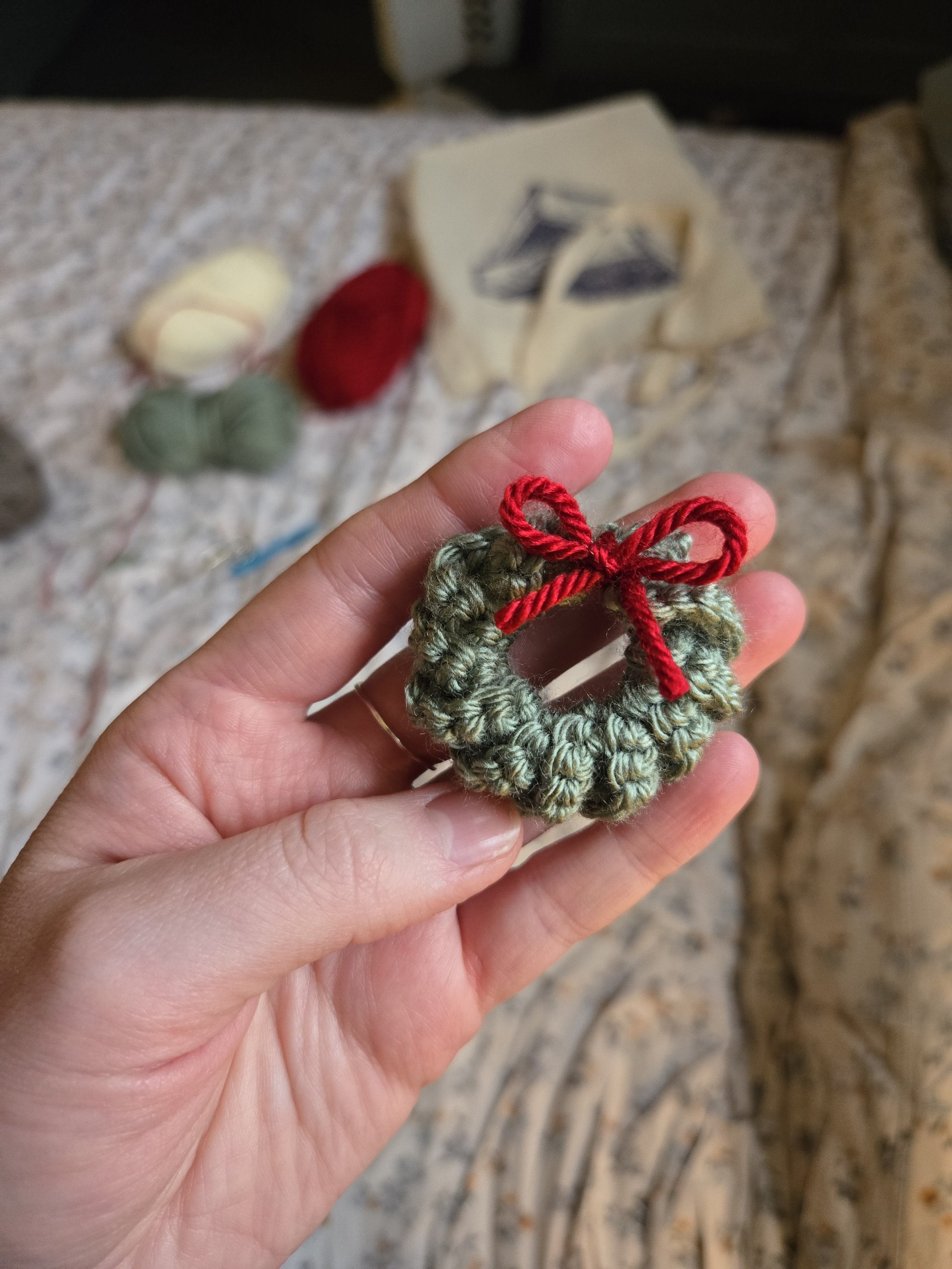
My own contribution to a cozy crochet project :)
AI Sources
“What are some stats that would help support this blog” prompt. Perplexity. Accessed Dec. 4.
