The crochet renaissance (and why we’re all hooked)
I remember the day I bought my first crochet hook. It was an afternoon in mid-August of 2020, meaning it was deathly hot in Montreal. I didn’t have air conditioning, and I’d spent months trying to configure all five of the fans I owned into an intricate cooling system. On this particular day, I was failing at the task.
August 2020 was also about six months into the pandemic. This meant that, on top of feeling like I was being cooked like a rotisserie chicken in my own home, I was also running out of hobbies to occupy myself with while the whole world was shut down. I’d already painted, got into cocktail-making, played every online trivia game I could find, grown my own tomatoes and basil, and learned how to make bread. By August, all of my plants were dead, I’d gained 10 pounds of bread weight and I had canvases stacked up in every corner of my home. It was time to move on to something else.
I don’t know whether I went to Michael’s craft store with the express goal of buying yarn or if I just wanted to stand in a building with air conditioning, but I’m glad I went. From the first stitch, I knew this would be a hobby I’d have for life. I felt calm for the first time in six months. The repitition of one stitch after another, the cadence of creation, gave me something to focus on that wasn’t the rising death count or the political unrest south of the border. My first trial project – three measly rows of 20 stitches – took me five minutes. After that, I was hooked (pun intended).
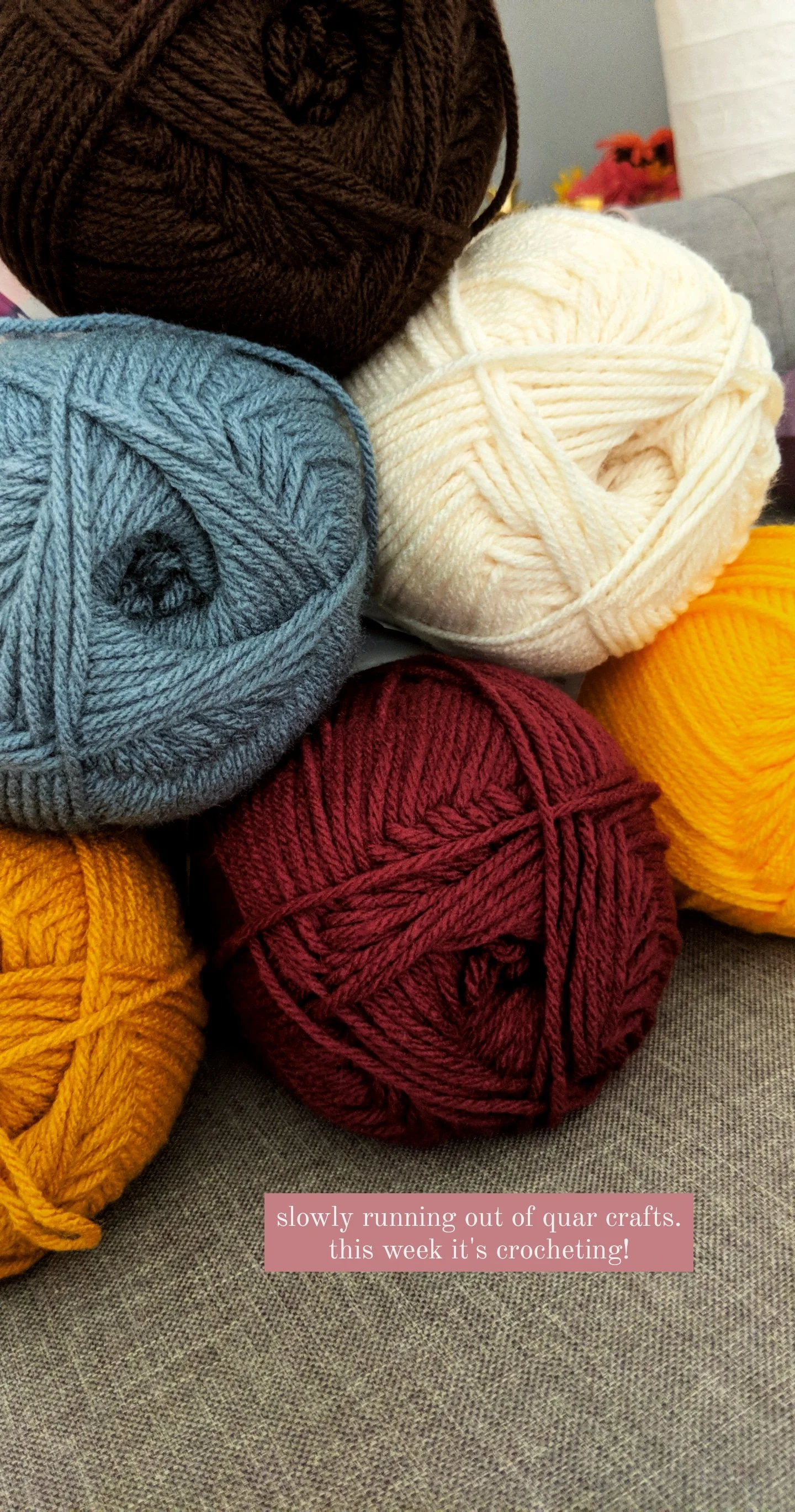
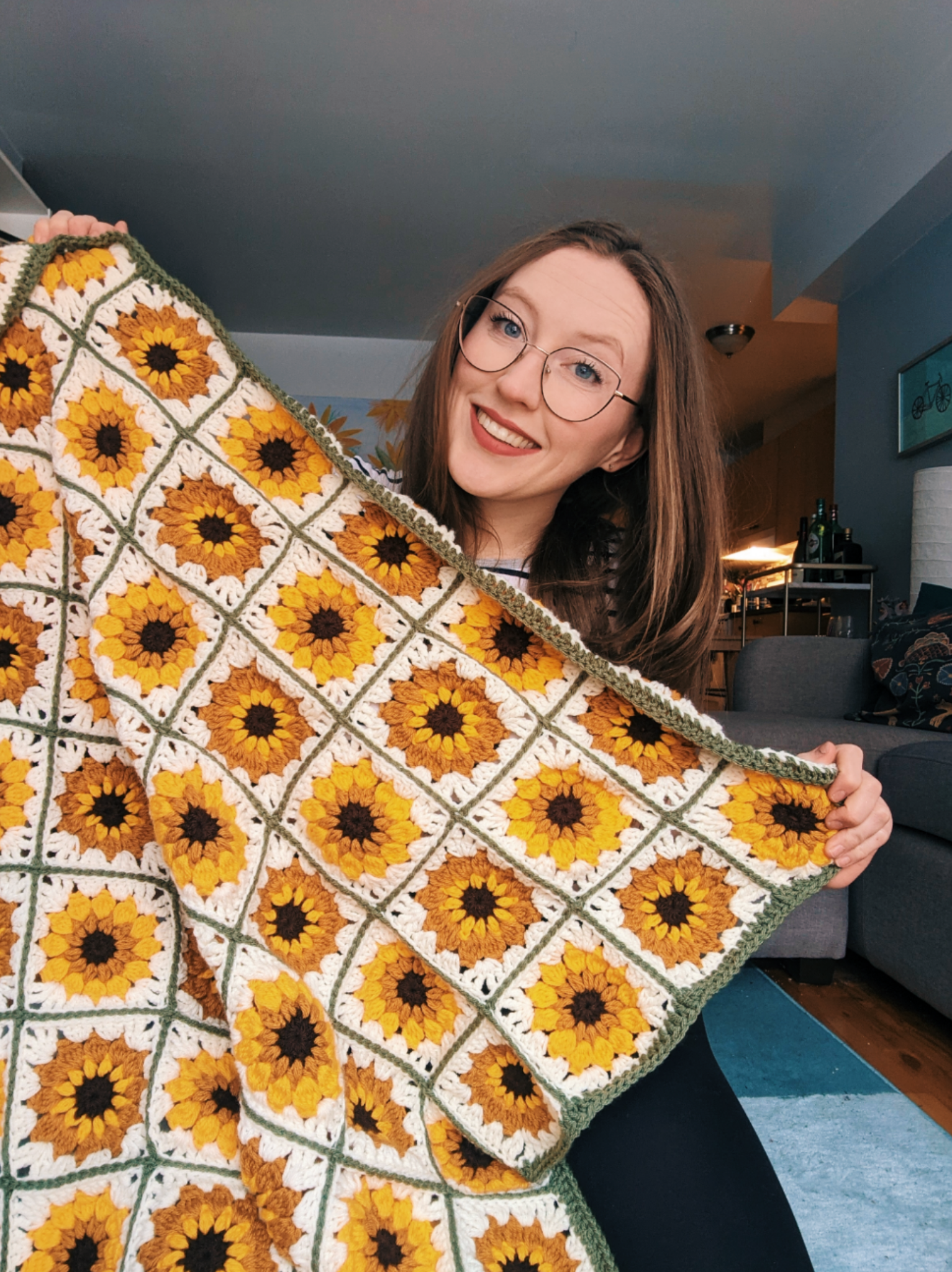
I was insatiable for months. I made two blankets, two cardigans, four pillows, six tiny pumpkins, three headbands and ten dishcloths by the end of the year. There wasn’t a single moment where I wasn’t working on something, researching a pattern, or talking my friends ears off about yarn.
Spoiler alert: I wasn’t the only one panic-buying yarn that year.
Everyone’s grandma was right
Crochet is not the coolest hobby in the world. When I used to think of crochet, I thought of itchy, heavy blankets made of cheap, fuzzy wool. Tiny baby hats in sickly pink and blue colours. Long, thick cardigans worn exclusively by librarians and middle-aged women who work in the accounting department.
But, TikTok introduced me to a new awakening in the crochet world. All of a sudden, granny squares were being fashioned into boho tank tops to wear during festival season. Harry Styles inspired troves of people to recreate a chunky patchwork cardigan he wore to a rehearsal for The Today Show. Vendors at craft fairs started producing mass quantities of amigurumi toys. It was official — crochet was getting a facelift.
According to recent data, over 73% of crocheters are between the ages of 18 and 34. Additionally, 53% of textile crafters in that age group crochet or knit daily. Young people were – and are – taking an interest in traditionally “grandma-type” hobbies at an incredibly high rate. But what is the motivation behind it?
The more crochet-focused content I consumed, the more I started to wonder what was happening outside the screen. It felt like something bigger was taking shape — not just a passing trend, but a return to slower, more intentional creativity. I wanted to find my new community out in the world, not just on a screen.
That’s how I found Shosho.
From solo stitching to sold-out cafés
“I’ve always done creative things,” she says over a Zoom call. “I got into crochet and knitting during the pandemic, self-taught on YouTube. It was a very casual thing because I was working full-time, but when I got laid off I suddenly had so much time. So I got the basics down, and I started Studio Shosho, which was just a little page on Instagram. I would just post videos of the things that I was making.”
Shosho Abotouk is the founder of the Montreal Crochet Knit Club. She plans and hosts events in Montreal every month, all focused on bringing the crochet and knit communities together to swap ideas, show off their latest projects, and prove that yarn people know how to have a good time.
When she got laid off from her 9-5 marketing job in 2023, Shosho turned what had been a casual hobby into something much bigger. First a creative outlet, then a business, and eventually, a community. Like so many crafters who discovered crochet during a time of uncertainty, she found comfort in the rhythm of it, describing how she made what she calls her “anxiety blanket” — endless rows of half-double crochets that helped her quiet her mind while she waited for her next step to take shape.
She’s not alone in crocheting her anxiety away. A survey of over 8,000 people found that 89.5% of crocheters felt calmer after crocheting. Other crafters have reported using crochet specifically to manage mental health issues that accompany depression, anxiety, grief, and chronic illness.
What started as a coping mechanism for Shosho quickly became something more public. She began selling her work at local craft markets, connecting with other crocheters, and realizing just how many people were quietly doing the same thing behind closed doors.
The club itself started almost by accident. Shosho decided to host a small soft launch meetup to see if anyone else might want to crochet together. Fifty people RSVP’d. The response was immediate and overwhelming. “It was like, has this ever happened before in Montreal? Have millennial or Gen Z crocheters and knitters ever gathered like this?” she told me. “Of course there’s been community center classes and stuff, but nothing like this, nothing that felt young and creative and cool.”
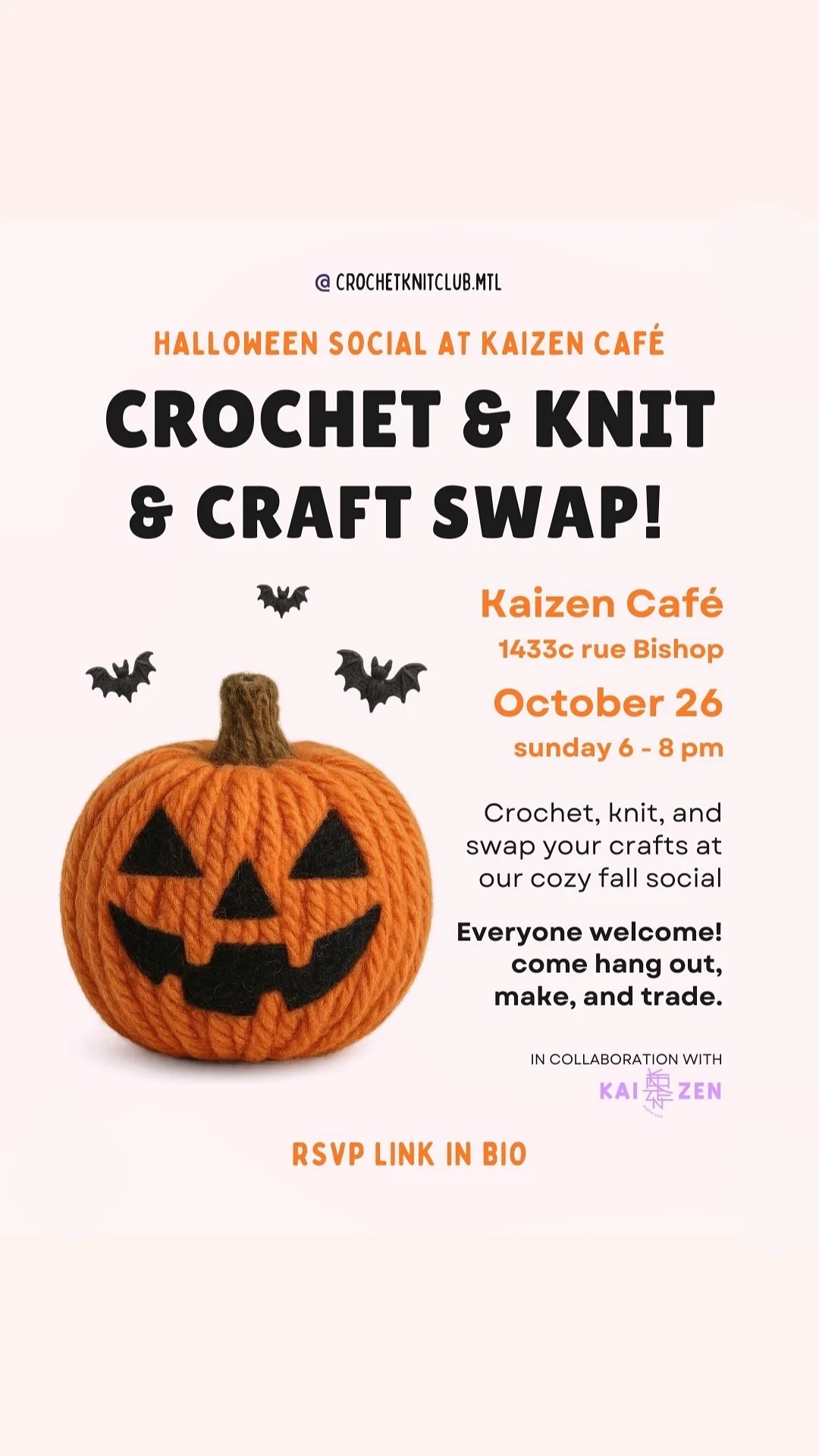
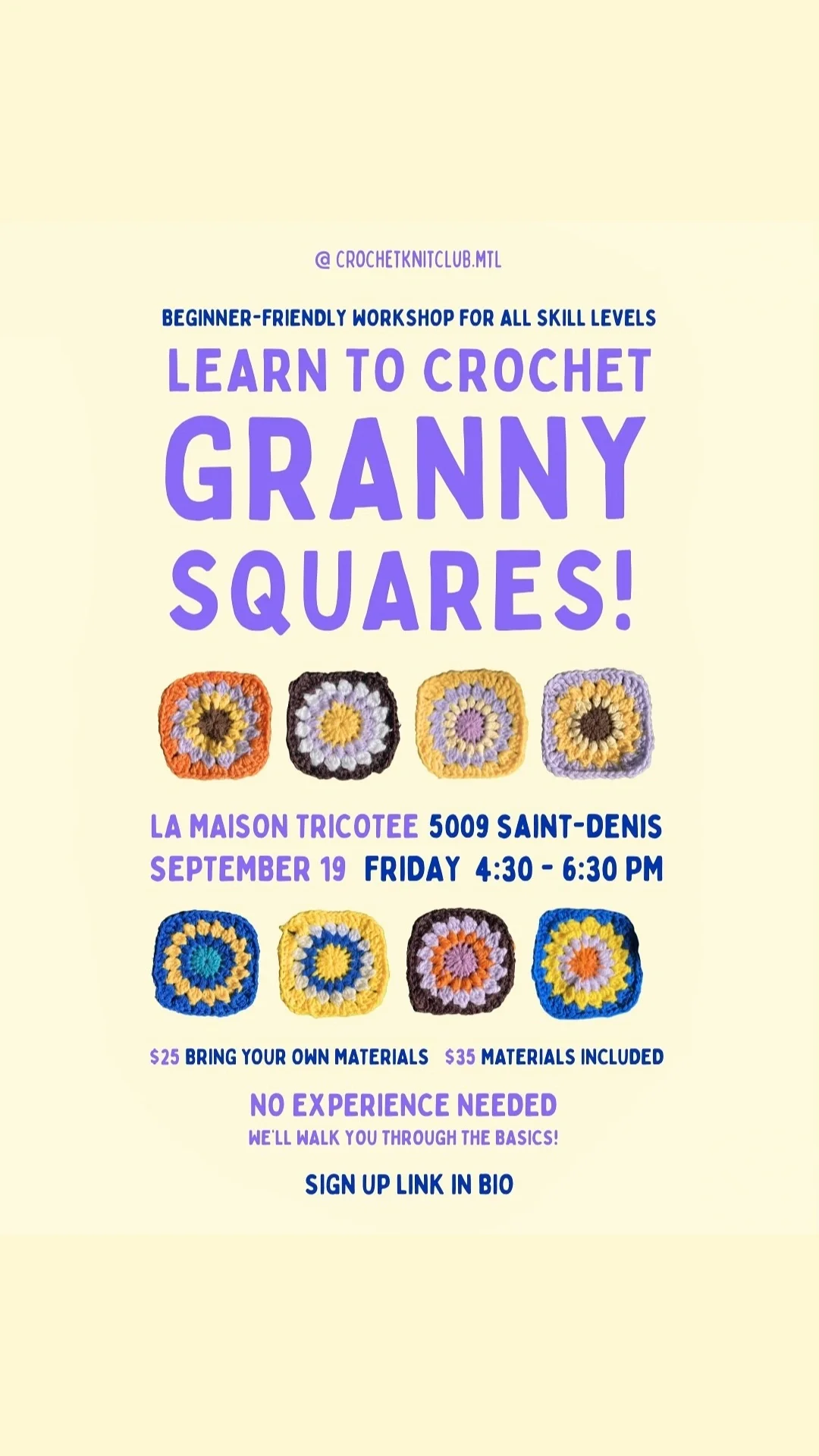
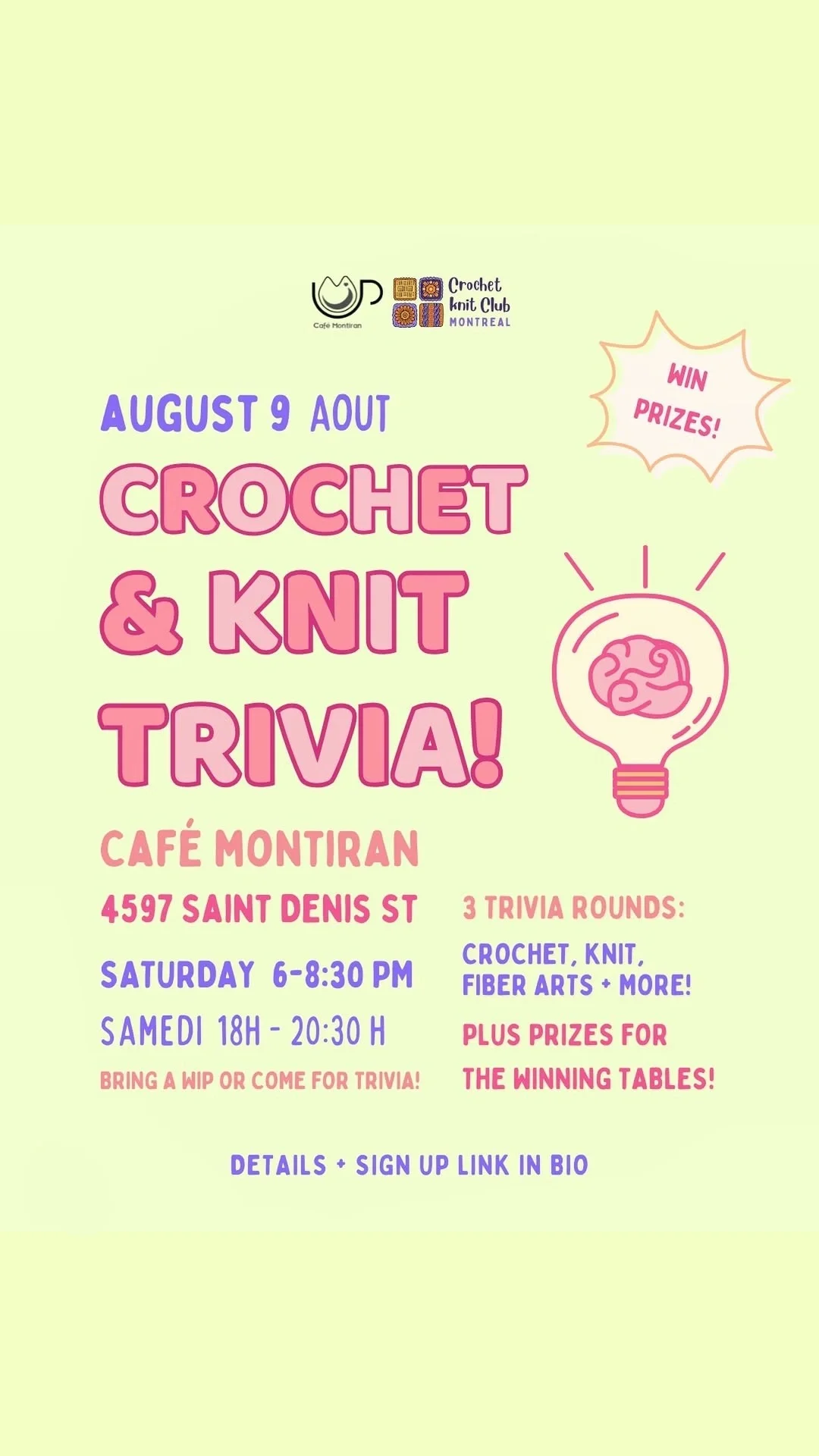
Since then, the Montreal Crochet Knit Club has sold out events across the city. From trivia, comedy and movie nights to picnics and even crochet-and-hike meetups, each one draws people from every corner of Montreal, all united by the same thread — a desire to slow down, make something tangible, and connect with others who get it.
Social stitching 101
Crochet has traditionally been a solitary hobby. It was something I did curled up on the couch, a podcast humming in the background, a cup of forgotten tea slowly cooling beside me. But there’s something different that happens when you do it with other people. You can feel it as soon as you walk into one of Shosho’s events — the low hum of conversation, the laughter when someone inevitably drops a stitch, the quiet moments where everyone’s hands are busy. It’s communal, but still peaceful.
“I think every crocheter or knitter probably prefers working at home,” Shosho told me, “but we also want to meet people who share the same hobbies that we do. Usually there’s only one crocheter or knitter in every friend group, if that. So when we come together, it just feels special. You can nerd out for hours about yarn and patterns and brands and tools.”
It’s easy to see why her events resonate. In a city where it can feel hard to meet people outside of work or school, the club offers something different — a space where no one has to perform, network, or even talk if they don’t want to. Shosho makes a point of checking in with anyone sitting alone, not to push them to socialize, but to make sure they feel comfortable just being there. “Some people just want to sit quietly and be in the room,” she said. “It’s still a cool experience to be part of it.”
That low-pressure environment is part of the club’s magic. It’s the opposite of what so many of us experience online — no algorithm, no competition, no need to be “good” at it. Just yarn, conversation, and the steady rhythm of creation. It’s proof that the act of making can be both deeply personal and quietly collective, and that sometimes, the best way to feel connected is to sit side by side in silence, letting the work speak for itself.
It’s not therapy, but it’s close
There’s a reason crochet and knitting have found new life with younger generations. Sure, it’s part aesthetic — the bright colours, the texture, the nostalgia — but it’s also something deeper. In a time when everything feels sped up, uncertain, and digitized, these crafts ask us to slow down. To do one thing with our hands for as long as it takes.
Beyond the mental health benefits, there’s also something empowering about making something tangible. As Shosho put it, “It’s so rewarding to learn how to make your own clothes, your own things. It’s a feel-good hobby.” Each project is proof that you can turn nothing into something — just a ball of yarn, a hook or some needles, and your hands.
That’s what makes this movement feel different from the crochet of our grandmothers’ time. It’s not just about practicality or pastime anymore. It’s about agency, connection, and care. Whether it’s sitting quietly at home or laughing through a comedy-and-crochet night in a Montreal café, we’re all part of a generation trying to find calm in the chaos.
In the end, it’s not really about the yarn. It’s about finding a way to keep it together, and sometimes that just happens to involve a 4mm hook.
AI Sources
“Give me 10 headline options for this blog” prompt. ChatGPT-5. Accessed Oct. 28
